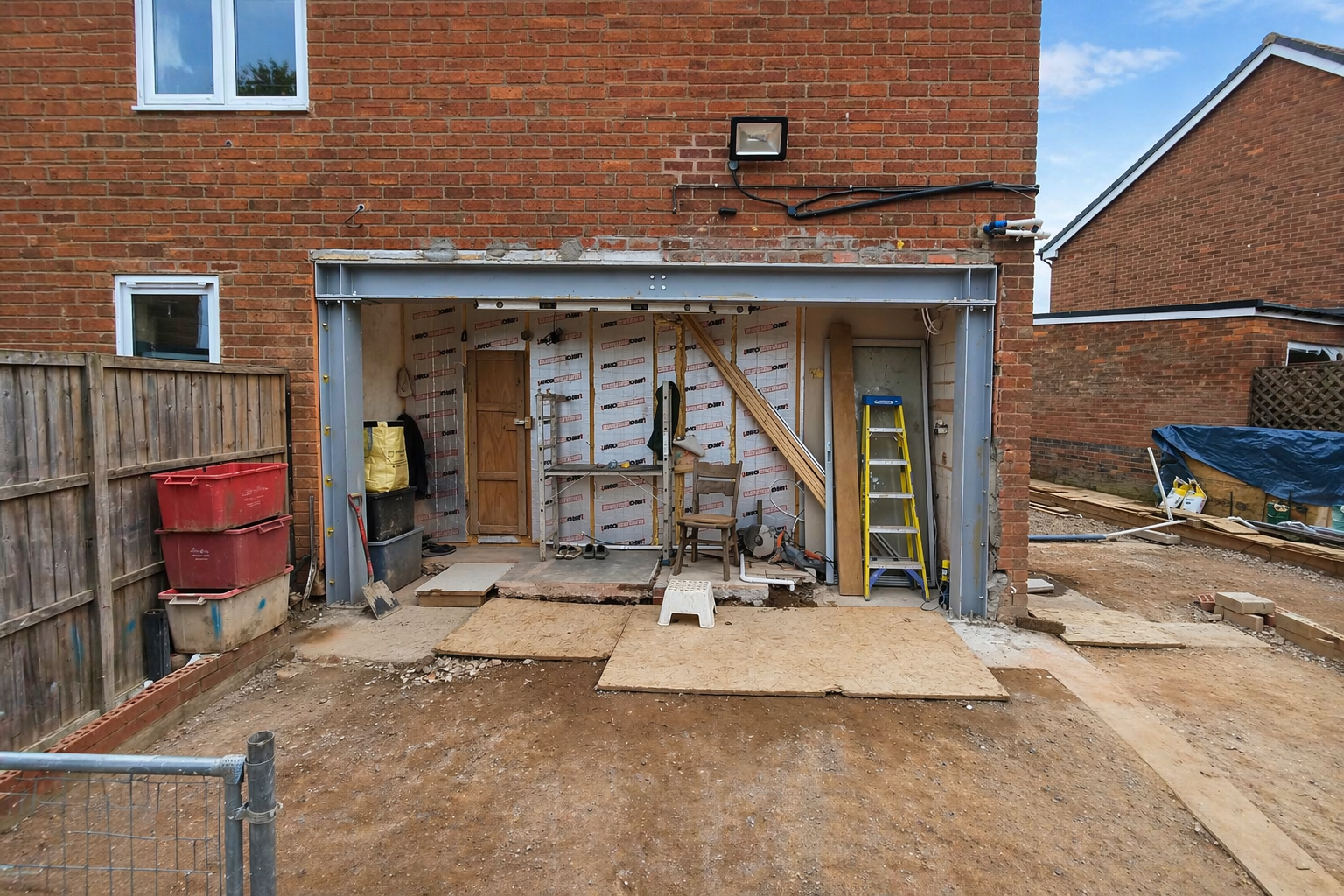
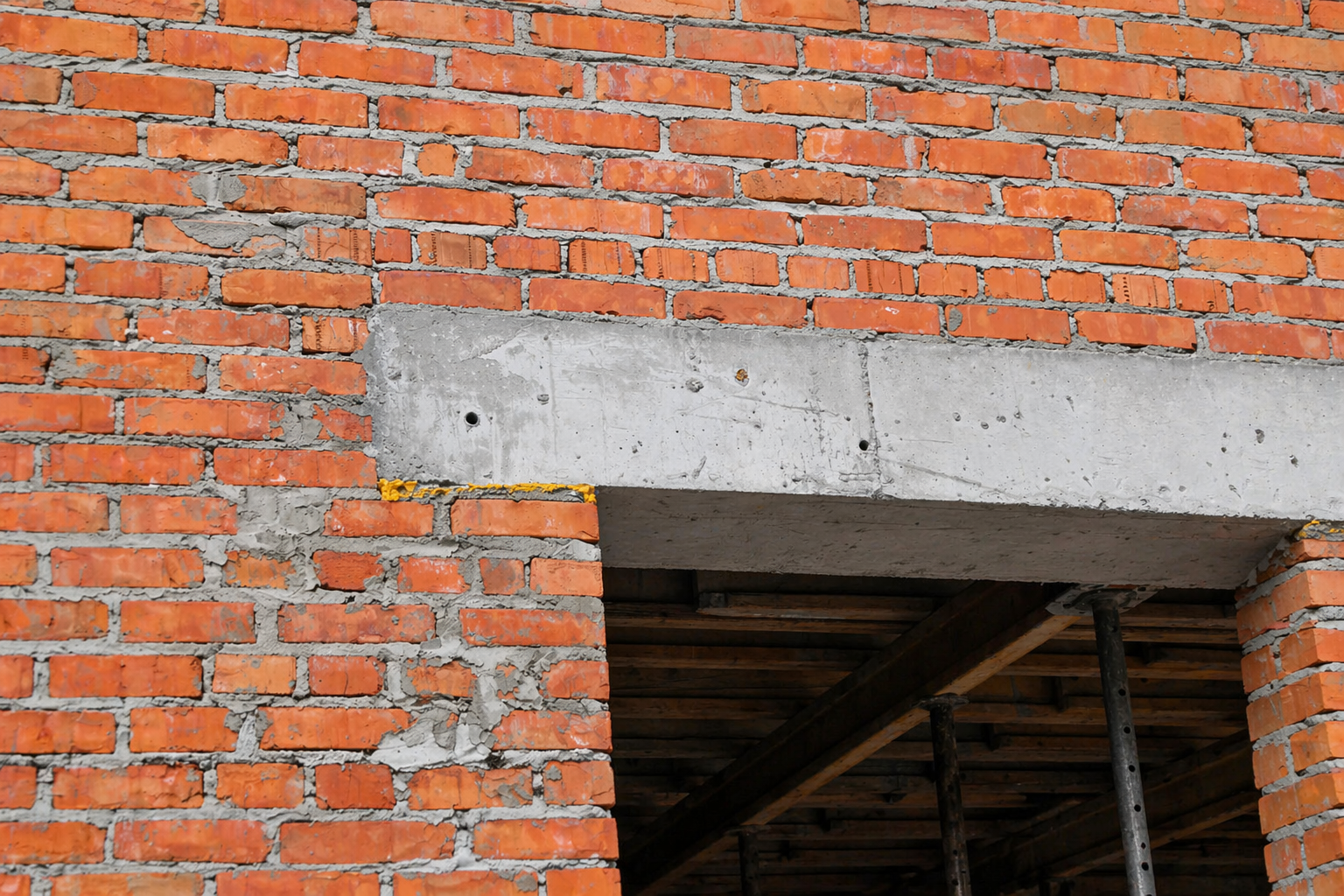
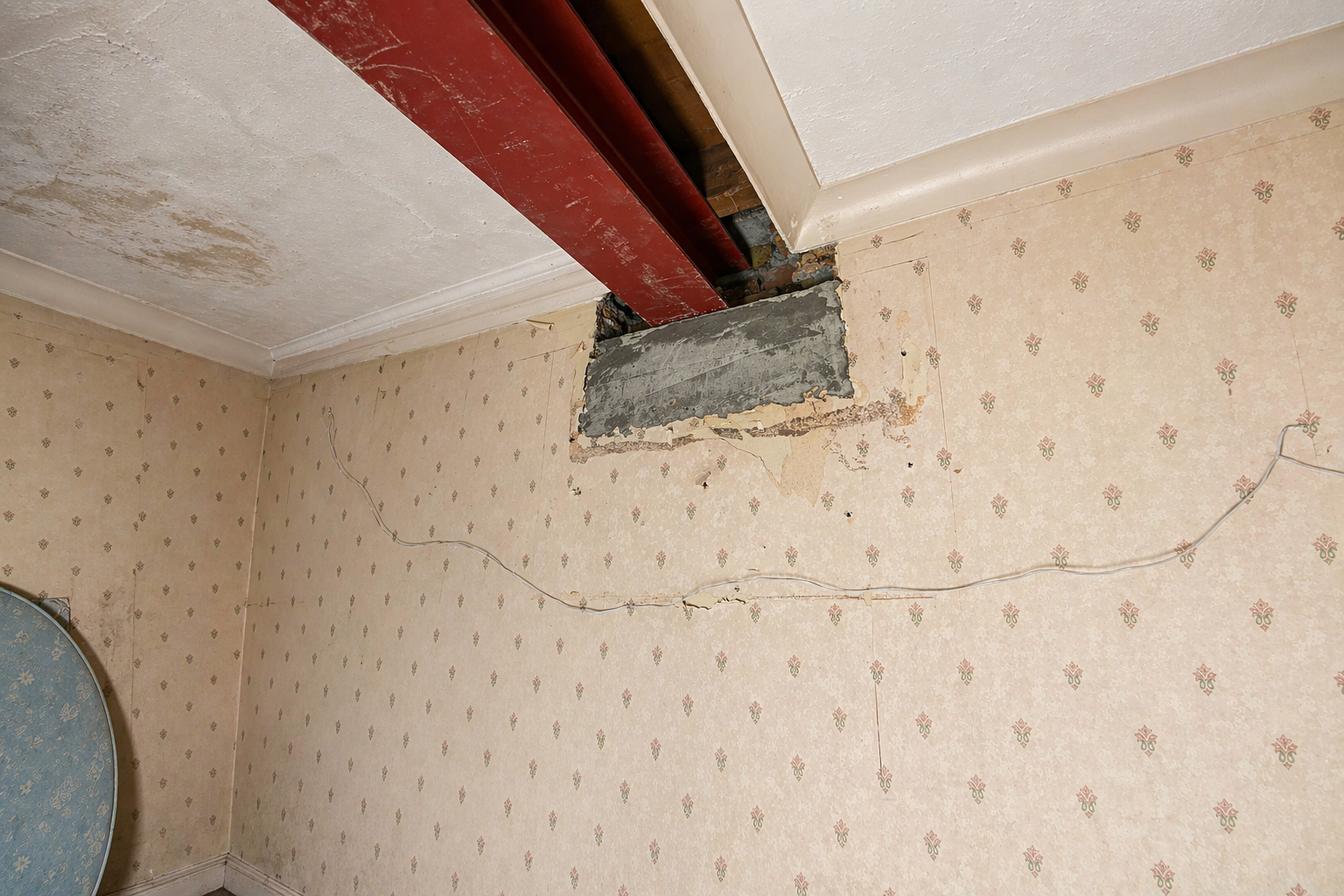
Alterations to existing structures present some of the most challenging scenarios in structural engineering, particularly when they involve the removal of external load-bearing walls.
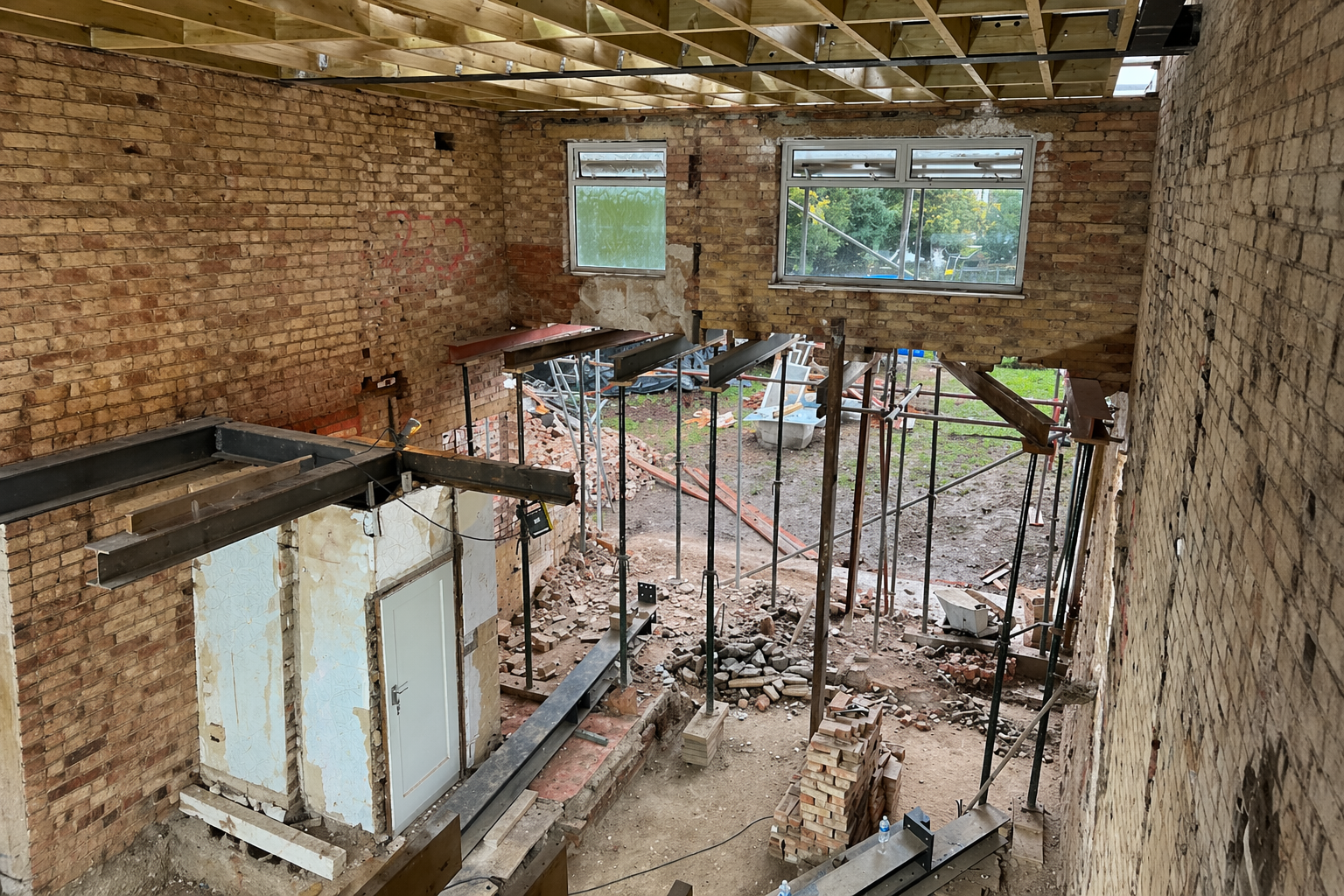
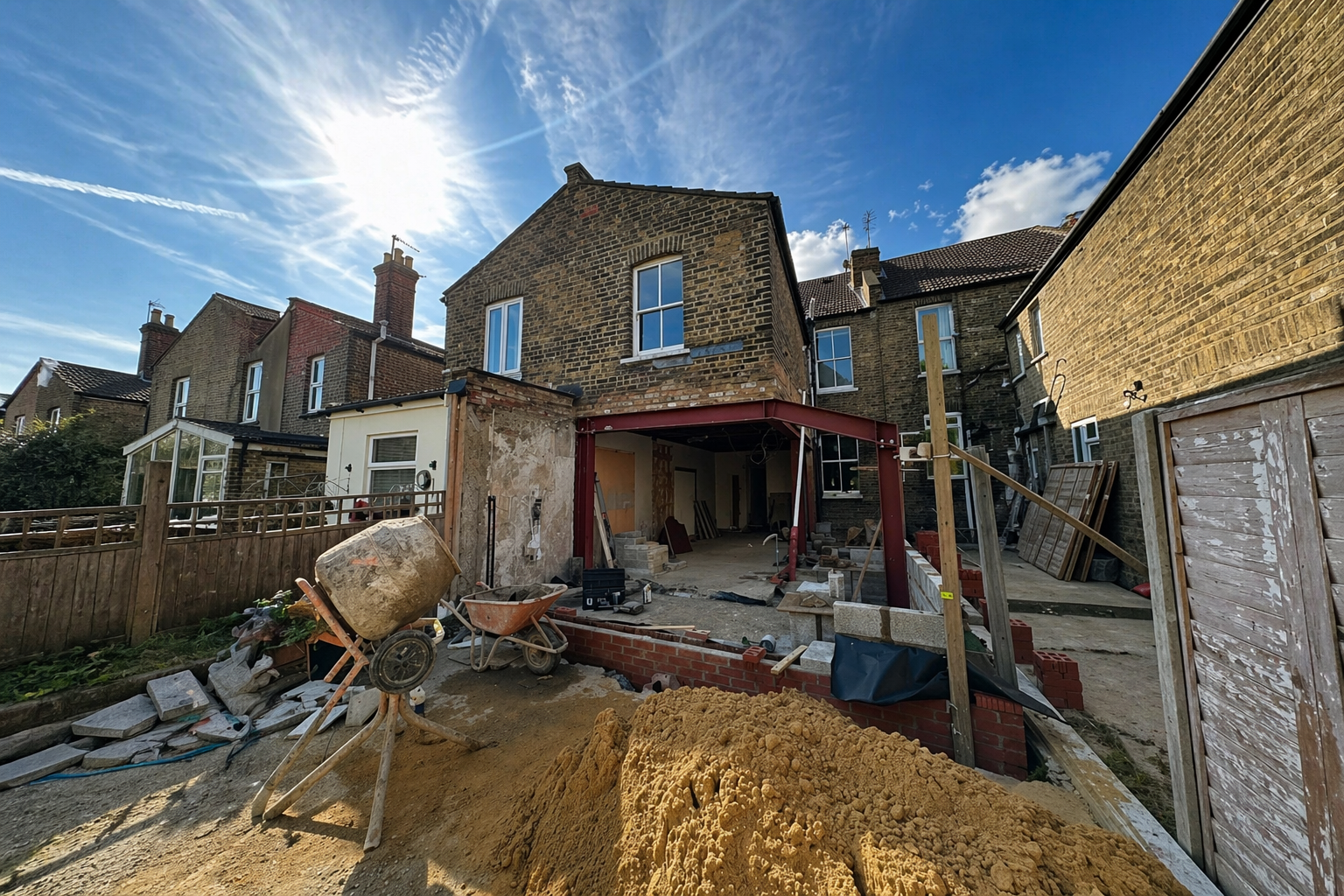
The photograph above illustrates a typical yet high-risk intervention: the removal of a masonry external wall at ground level to create an enlarged opening, supported temporarily by a carefully designed propping and steelwork system.
Projects of this nature require a clear understanding of load paths, construction sequencing, and the behaviour of existing materials—often within buildings that were never designed to be altered in this way.
Understanding the Existing Structure
In many traditional masonry buildings, external walls perform multiple structural roles simultaneously:
- Supporting vertical loads from upper floors and roof structures
- Providing lateral stability to the building
- Acting as restraint to floor diaphragms
- Transferring loads directly into shallow strip foundations
In the case shown, the external brick wall was supporting timber floor joists at first-floor level, as well as loads from the masonry above. Removing such a wall without adequate temporary and permanent support would lead to uncontrolled load redistribution and potential collapse.
Temporary Works and Propping Arrangement
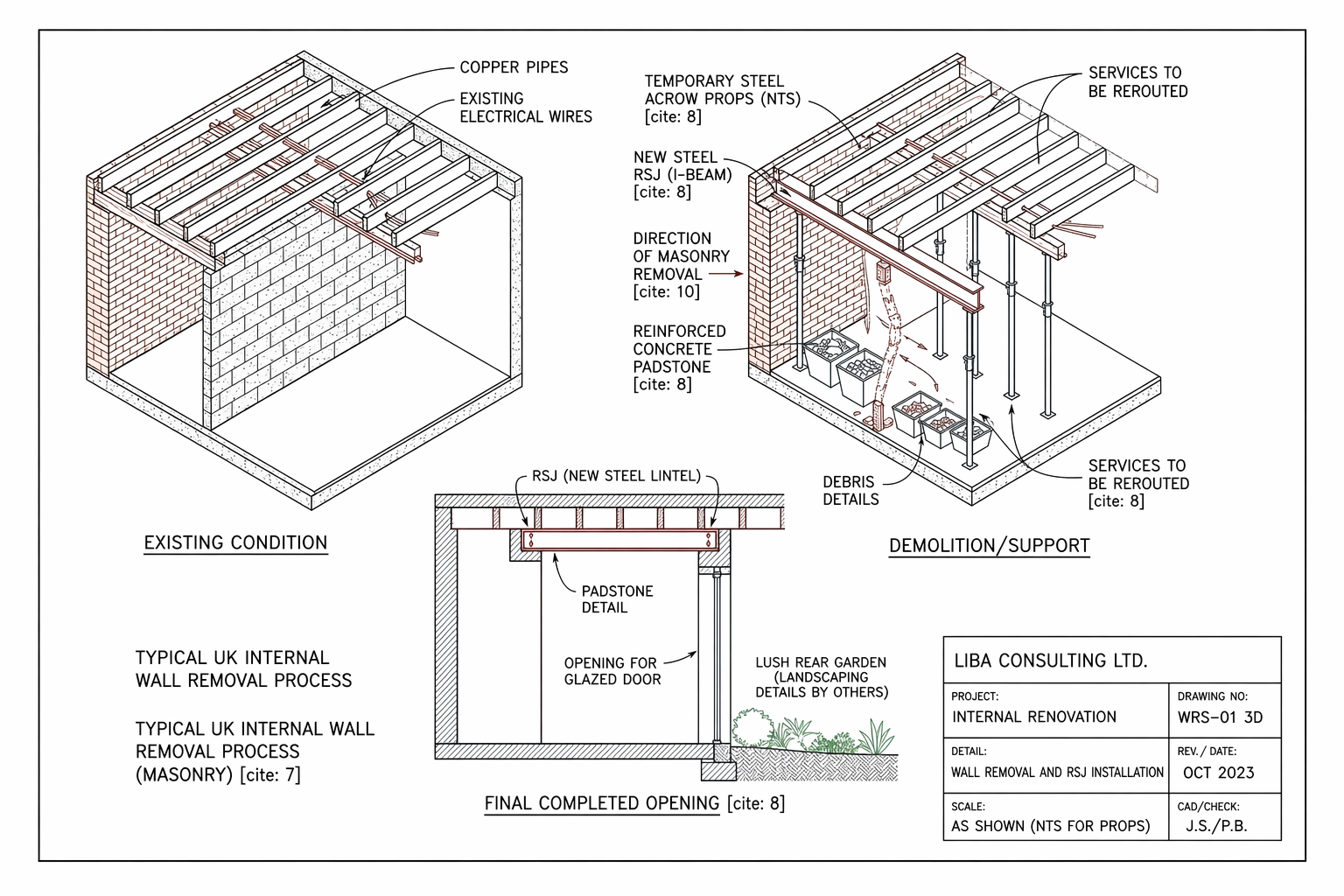
Before any masonry was removed, a comprehensive temporary works scheme was implemented. As seen in the photo, this included:
- Steel needle beams installed through the wall
- Vertical props transferring loads safely to the ground
- Timber and steel bracing to provide stability during demolition
- Local pad foundations to prevent punching or bearing failure
Temporary works were designed to ensure that loads from the upper structure remained fully supported at all times. Particular attention was given to prop spacing, eccentric loading, and tolerance control, which are critical in constrained refurbishment environments.
Sequenced Demolition and Structural Control
The removal of the wall was carried out in a carefully controlled sequence:
- Installation and preloading of temporary supports
- Verification of load transfer
- Incremental removal of masonry below the support line
- Continuous inspection during demolition
This staged approach minimises sudden load changes and reduces the risk of cracking or excessive deflection in the remaining structure.
Permanent Structural Alterations
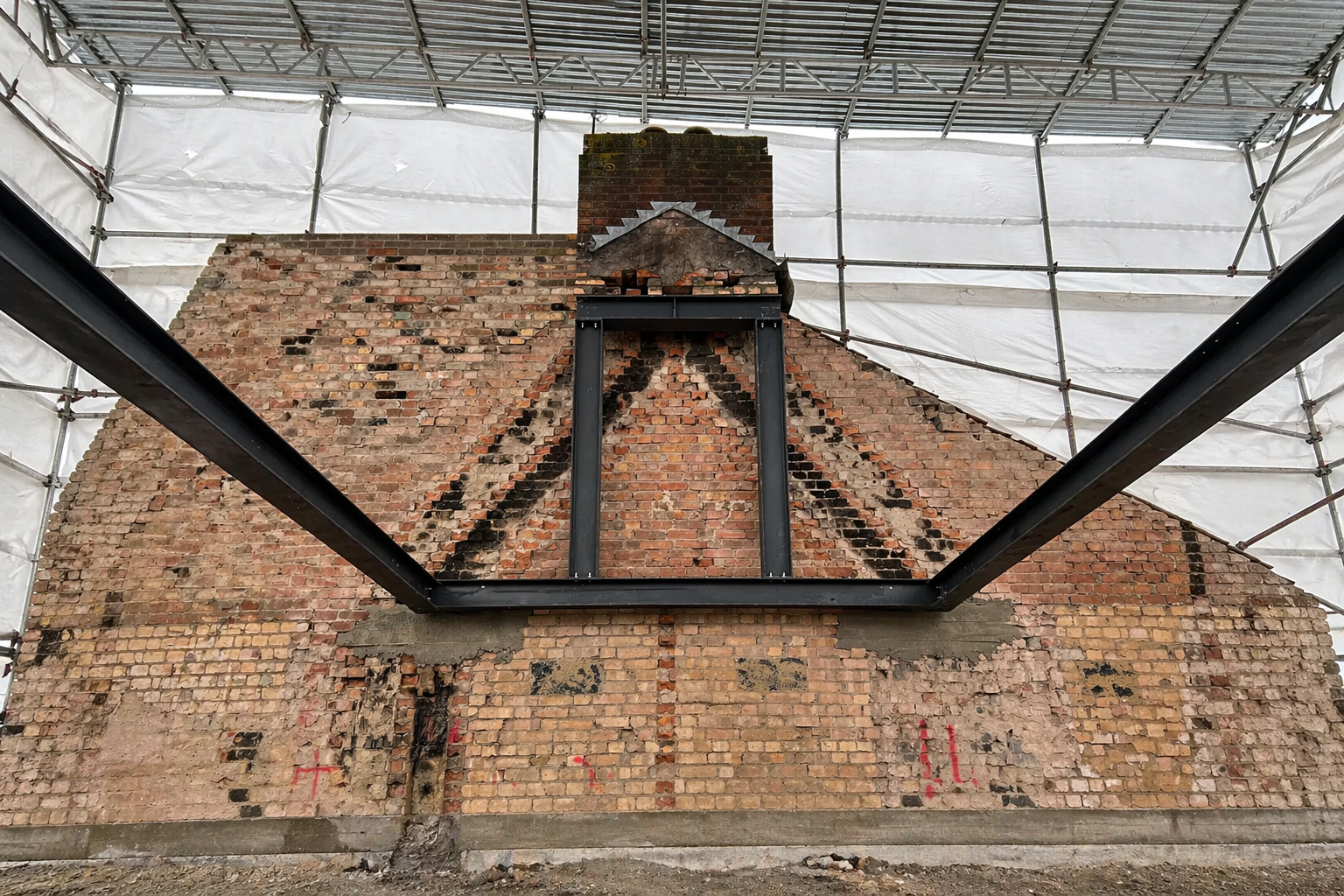
Following demolition, permanent structural elements—typically steel beams or frames — are installed to replace the load-bearing function of the removed wall.
These elements are designed to:
- Support vertical loads from the structure above
- Limit deflections to protect finishes and glazing
- Transfer loads efficiently into existing or new foundations
- Maintain overall structural stability
Connection detailing is critical, particularly where new steelwork interfaces with existing masonry or timber floors.
Challenges in Existing Building Alterations
Projects like this frequently encounter uncertainties, including:
- Variability in masonry strength and workmanship
- Hidden defects or undocumented alterations
- Limited headroom and access for installation
- Sensitivity of adjacent structures
Early site investigation, engineering judgement, and flexibility in design are essential to manage these risks effectively.
The Importance of Engineering Oversight
Alterations to existing load-bearing elements require close coordination between structural design, temporary works, and construction methodology. Regular inspections and clear communication on site are just as important as the calculations behind the design.
At Liba Consulting, we specialise in complex structural alterations, ensuring that both temporary and permanent conditions are safe, buildable, and compliant with current standards.
Conclusion
The removal of an external load-bearing wall, as shown in this project, highlights the importance of thoughtful structural engineering in refurbishment works. With the correct temporary works strategy, sequencing, and permanent structural solution, significant architectural transformations can be achieved safely within existing buildings.
Early involvement of a structural engineer is key to managing risk, cost, and programme on alteration projects.

Ready to Discuss Your Project?
Whether you need structural calculations, beam design, support with building regulations, or advice for an extension or loft conversion, we’re here to help. Send us your details and we’ll come back to you with a practical next step.
Read more