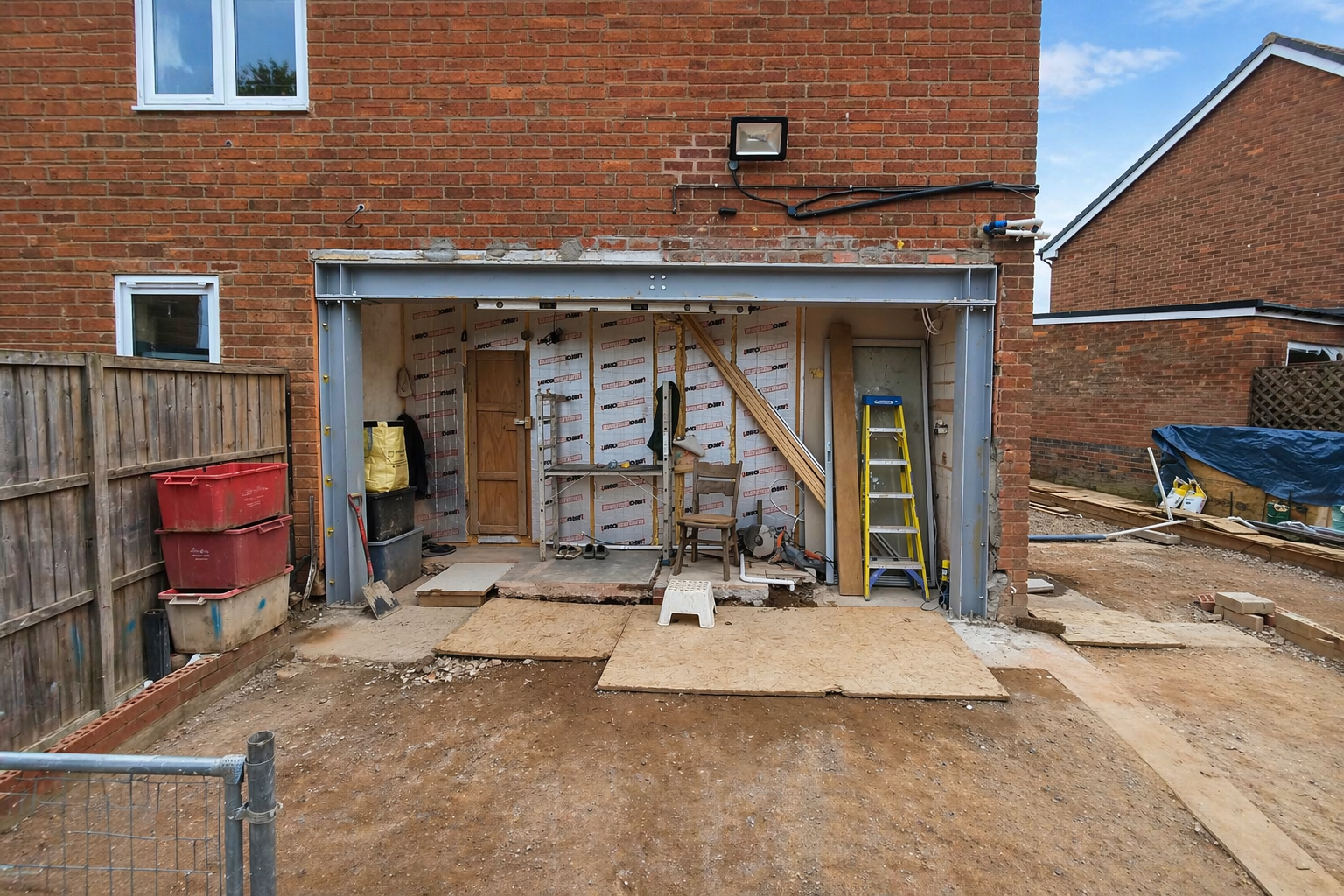
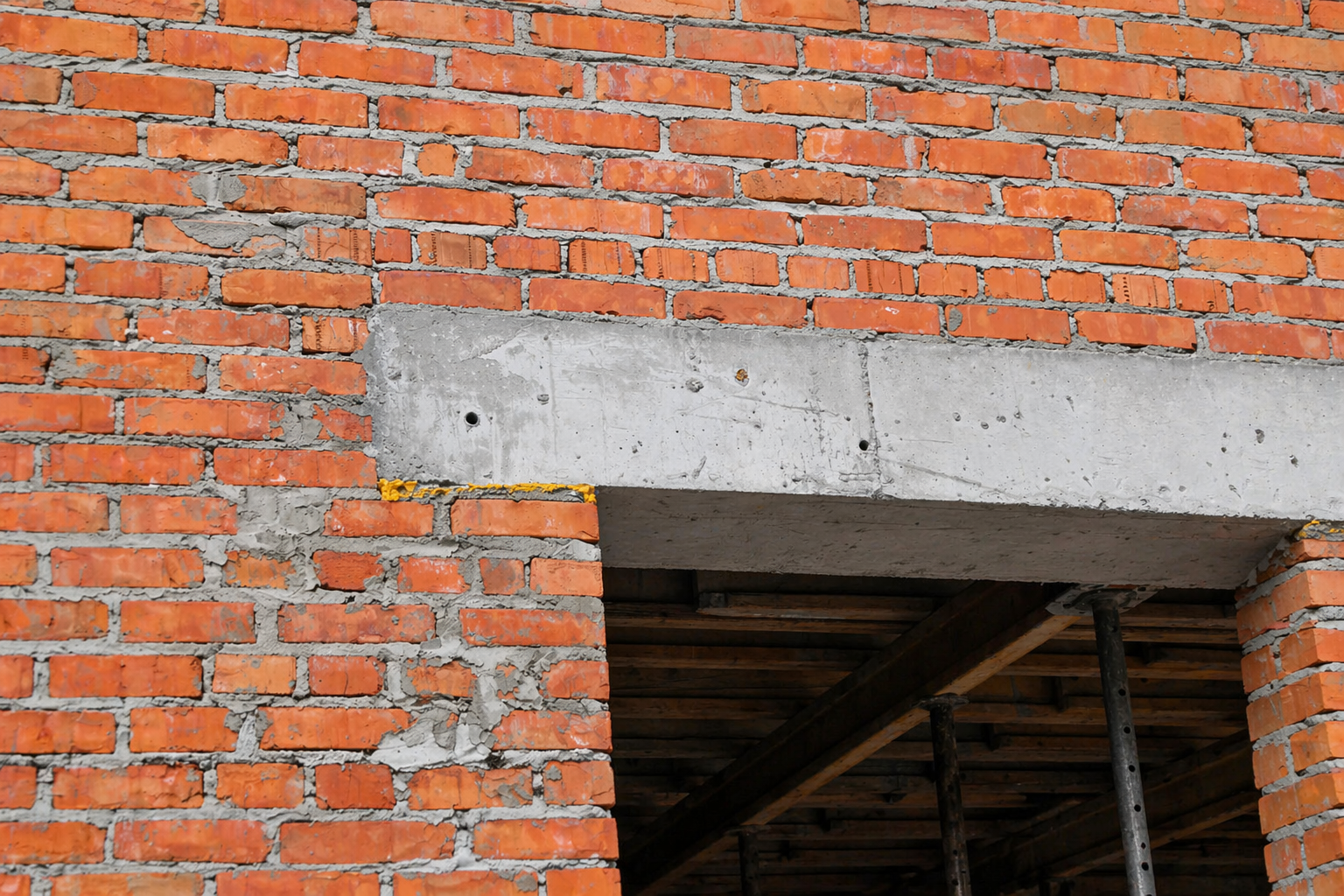
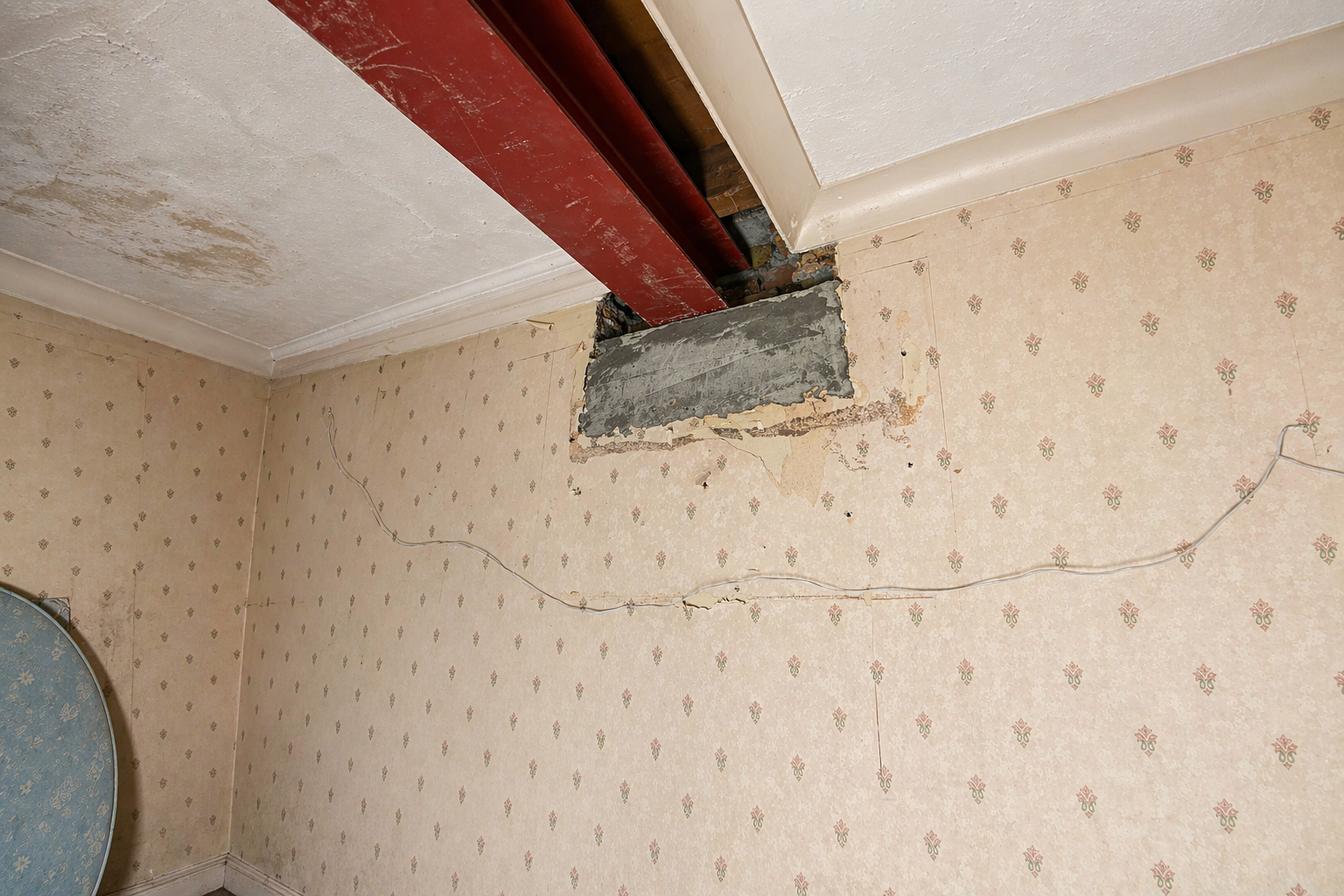
The removal of ground load-bearing walls is a critical structural intervention that requires careful engineering judgement, robust analysis, and well-planned temporary works. Unlike non-load-bearing partitions, ground load-bearing walls form part of the primary vertical and lateral load path, often supporting multiple storeys and transferring loads directly into the foundations and ground.
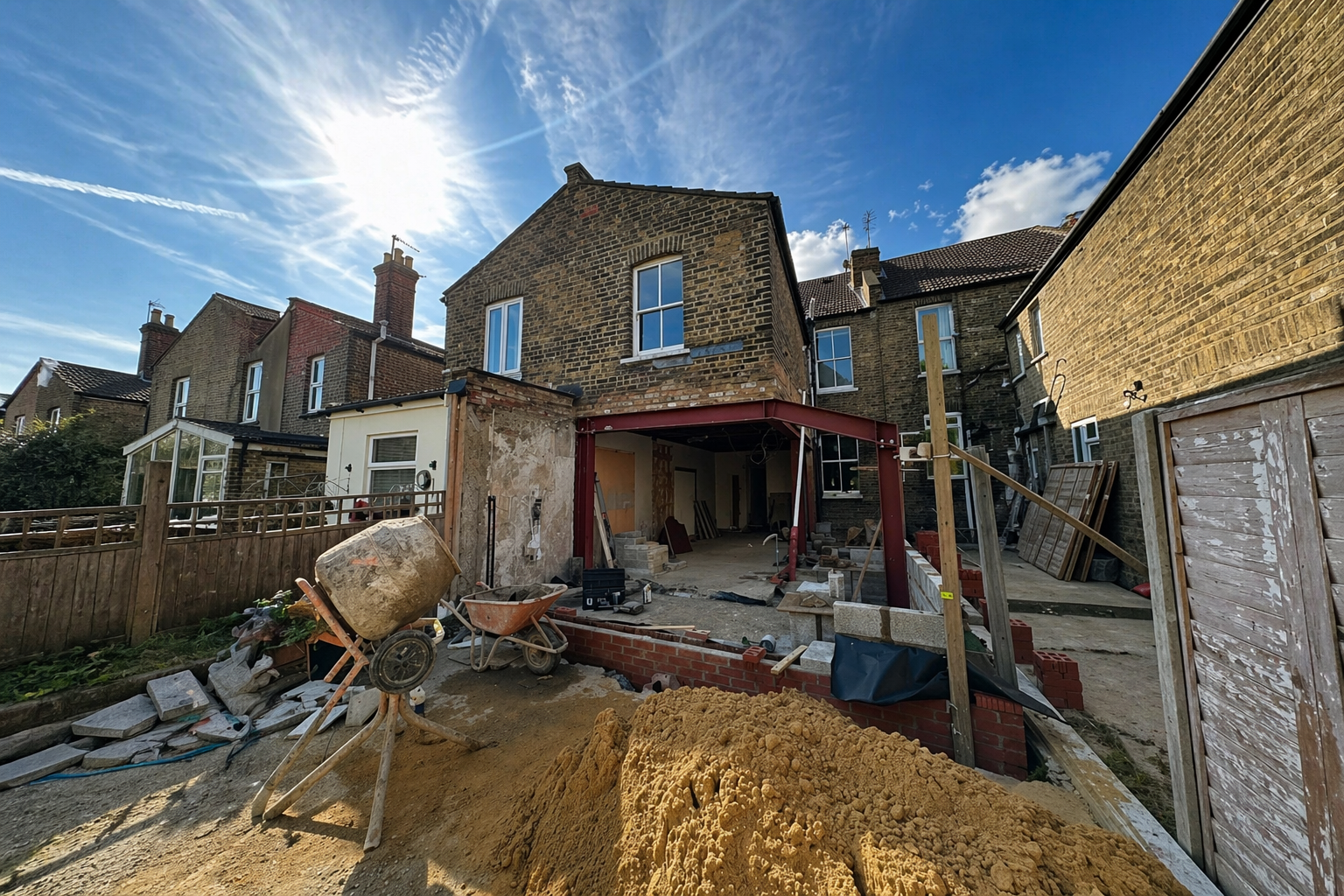
At Liba Consulting, we regularly support clients and contractors on projects involving the alteration or removal of ground load-bearing walls, particularly in refurbishment, change-of-use, and basement extension schemes. This article outlines the key structural engineering principles that govern these works.
Identifying the Structural Function of the Wall
The first and most critical step is to confirm what the wall is supporting. Ground load-bearing walls may carry:
- Vertical loads from upper floors and roofs
- Loads from internal frames or façade elements
- Lateral loads through diaphragm action
- Load sharing with adjacent walls or columns
In older buildings, load paths are often non-intuitive, and original drawings may not reflect subsequent alterations.
Engineering best practice includes:
- Detailed review of available structural drawings
- Site inspections to confirm wall thickness, material, and construction
- Assessment of load paths from roof to foundation
Assessing Foundations and Ground Interaction
Ground load-bearing walls are typically supported by strip foundations, pad foundations, or ground beams. Removing the wall alters how loads are transferred into the ground and may lead to:
- Overloading of remaining foundations
- Differential settlement
- Local bearing failure
A structural assessment must confirm whether existing foundations can accommodate redistributed loads or whether new foundations or transfer structures are required.
Key considerations include:
- Foundation size, depth, and condition
- Ground bearing capacity and settlement sensitivity
- Interaction with adjacent foundations
Temporary Works and Propping Strategy
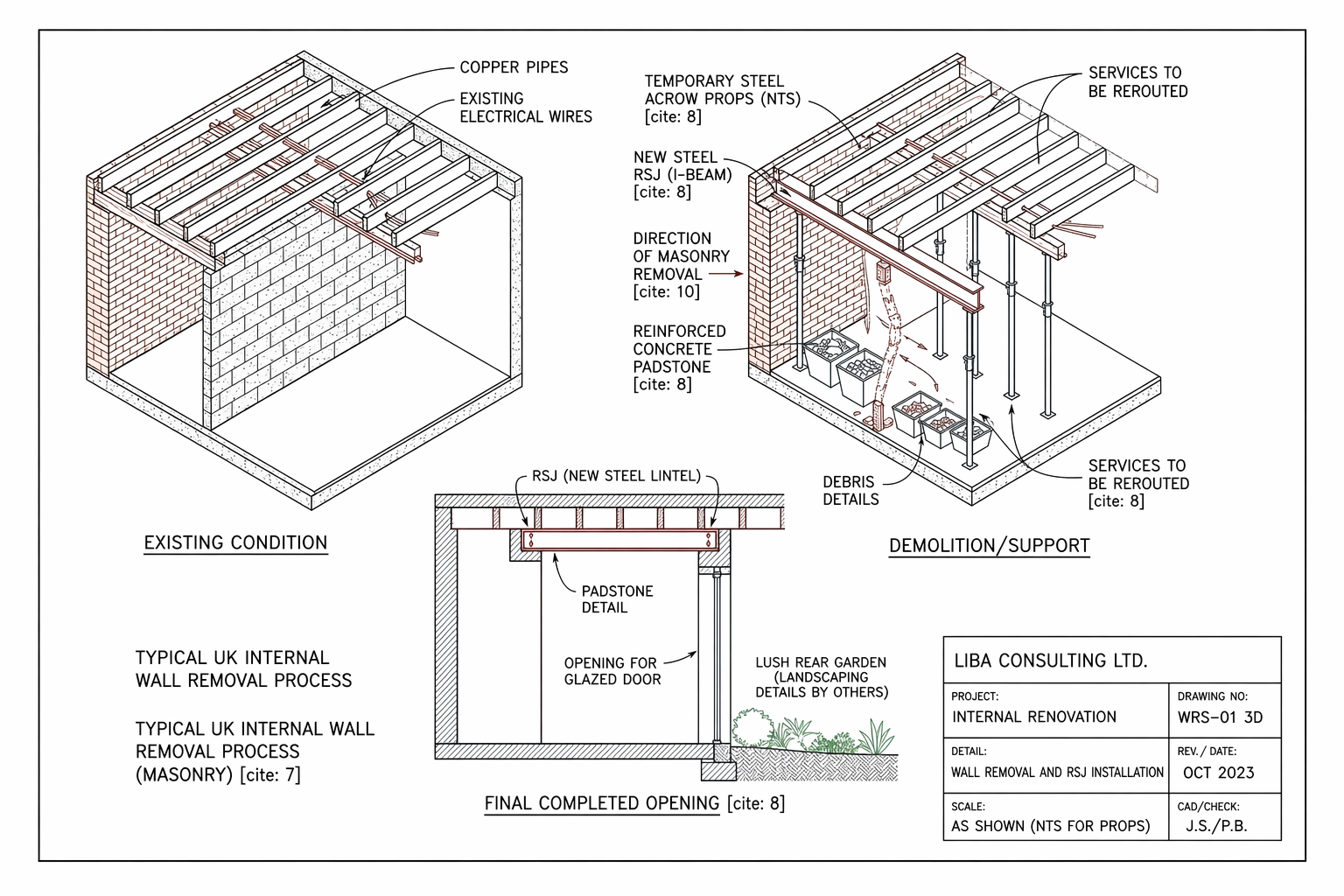
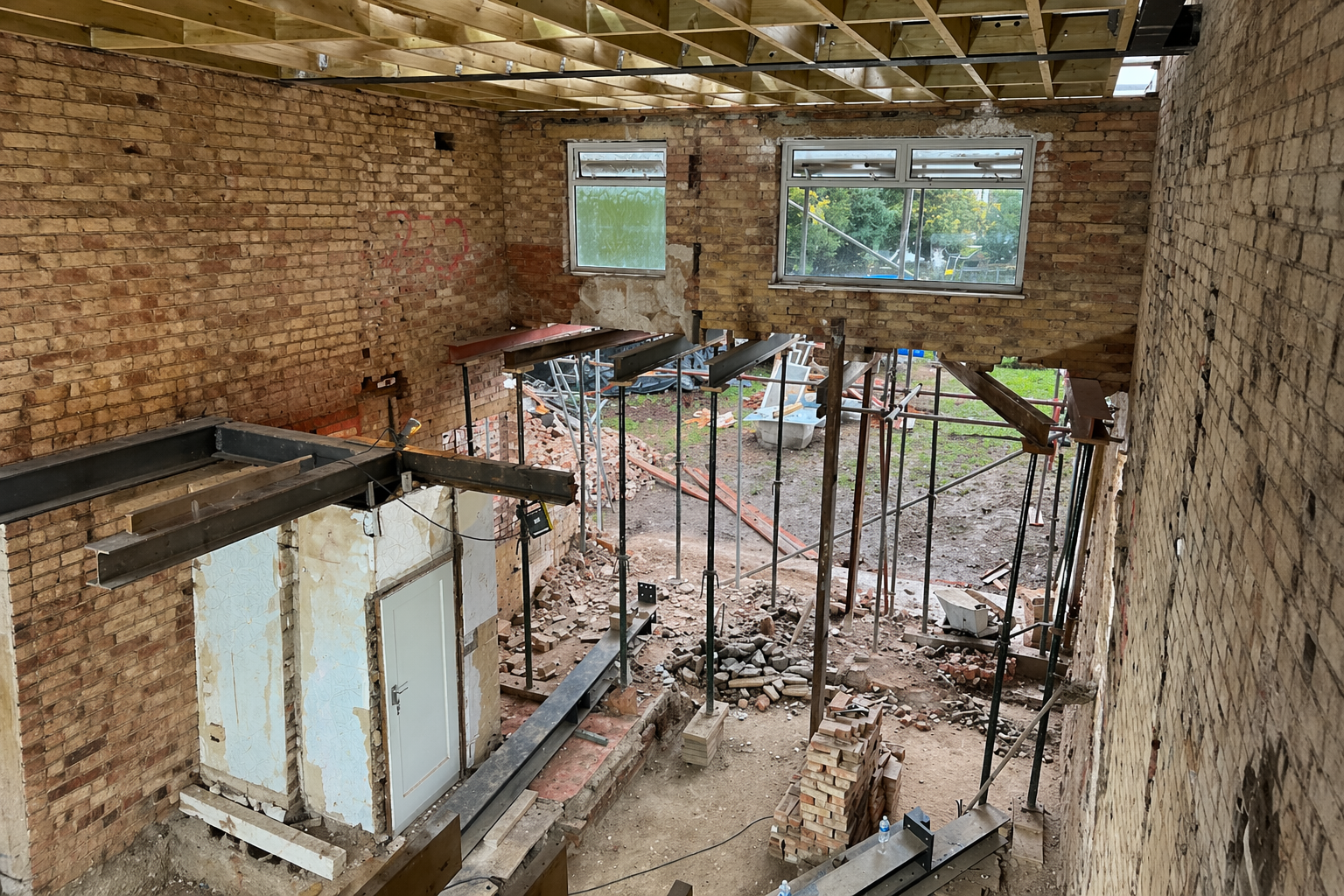
Temporary works are fundamental to the safe removal of ground load-bearing walls. Loads must be supported at all times, including during partial demolition.
Typical temporary works solutions include:
- Needles with vertical props
- Propping towers or raking props
- Temporary steel frames
- Floor-to-floor propping systems
Temporary works must be designed for:
- Ultimate and serviceability limit states
- Construction tolerances and sequencing
- Accidental load cases
At Liba Consulting, we place strong emphasis on clear load paths, buildability, and sequencing, ensuring the temporary condition is no less robust than the permanent one.
Permanent Load Transfer Solutions
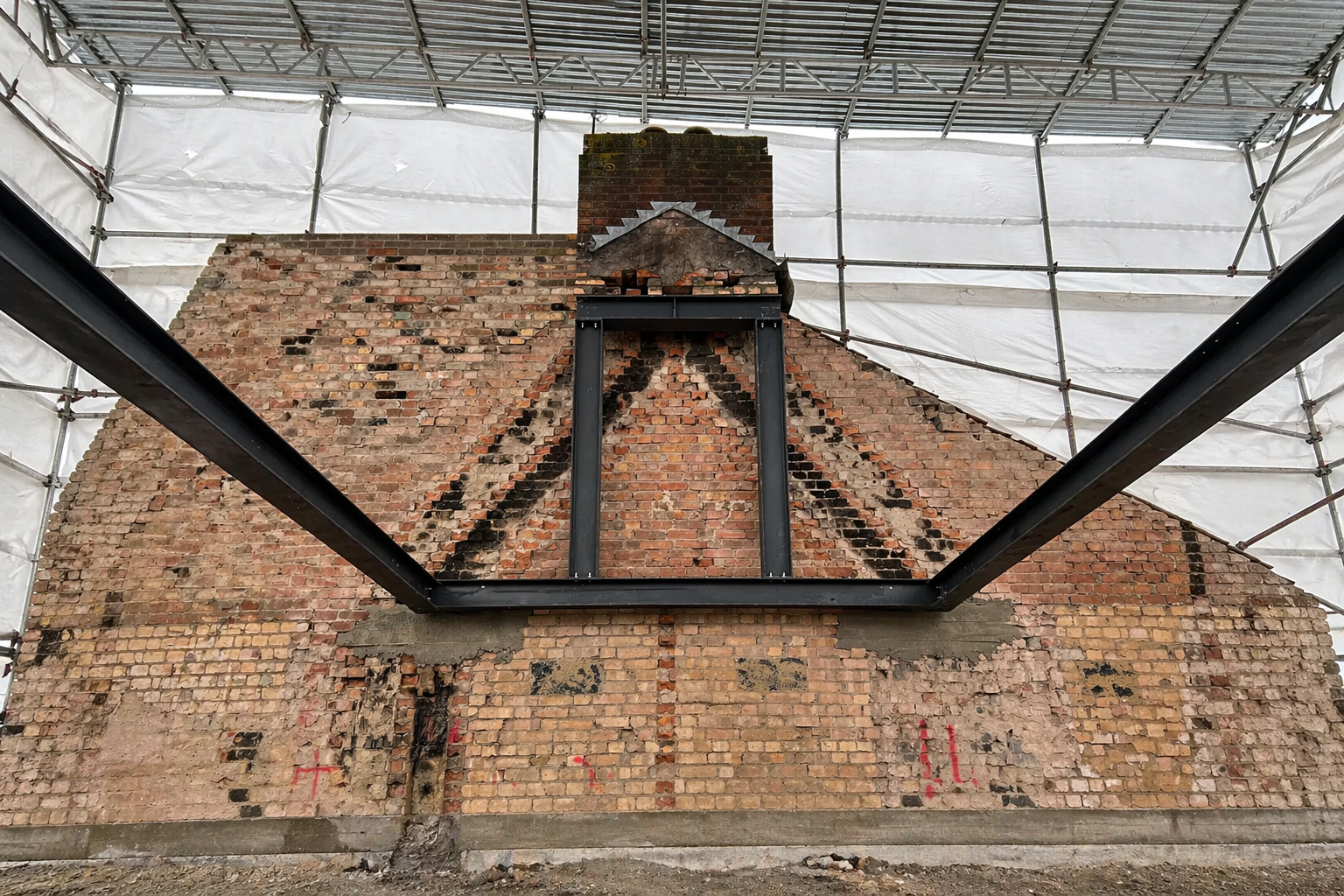
Once the wall is removed, loads are typically redistributed using permanent structural elements such as:
- Steel beams or transfer girders
- Reinforced concrete beams or walls
- New columns or posts
- Local strengthening of floors or foundations
Design must account for:
- Load combinations and continuity
- Deflection limits to protect finishes and services
- Compatibility with existing structure
Often, installation tolerances and connection detailing govern the success of the solution.
Sequencing and Phased Removal
Ground load-bearing wall removal should always follow a clearly defined sequence, for example:
- Install temporary supports
- Confirm load transfer through monitoring or preload
- Remove wall in controlled stages
- Install permanent structure
- Gradually release temporary works
Structural checks must consider each intermediate stage, not just the final arrangement.
Monitoring, Risk, and Compliance
Given the inherent risks, monitoring is often required, particularly where walls support multiple storeys or are adjacent to sensitive structures.
Common measures include:
- Crack monitoring
- Deflection checks of temporary and permanent elements
- Regular site inspections during critical stages
Ground load-bearing wall removal also frequently triggers:
- Building Control approvals
- Temporary works coordination duties
- Increased design liability
Clear documentation and responsibility allocation are essential.
Conclusion
Removing ground load-bearing walls is a high-risk structural operation that demands detailed understanding of load paths, foundation behaviour, and construction sequencing. With appropriate investigation, well-designed temporary works, and robust permanent solutions, these alterations can be delivered safely and efficiently.
At Liba Consulting, we specialise in complex structural alterations and temporary works engineering, supporting projects from early feasibility through to construction delivery.

Ready to Discuss Your Project?
Whether you need structural calculations, beam design, support with building regulations, or advice for an extension or loft conversion, we’re here to help. Send us your details and we’ll come back to you with a practical next step.
Read more