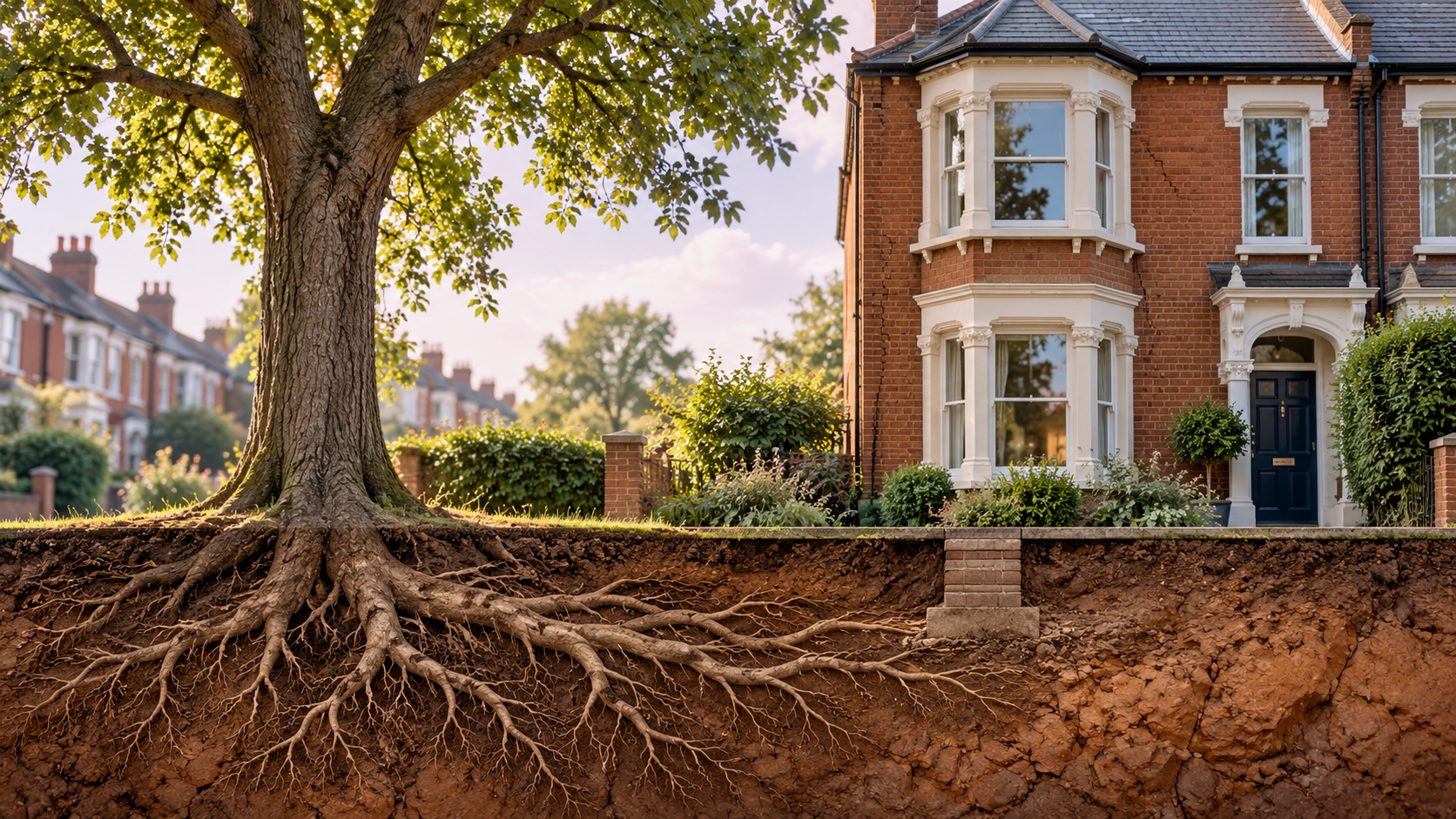
Trees bring shade, greenery and character to North London. However, where a property stands on shrinkable clay, moisture taken up by nearby roots can contribute to subsidence. For homeowners across North London, understanding that process helps you respond sensibly to cracks and make informed decisions about trees near your home.
A nearby tree does not automatically mean a building is at risk. Most trees close to buildings cause no damage. The important question is whether the ground, foundations and vegetation are interacting in a way that causes movement.
How do trees cause subsidence?
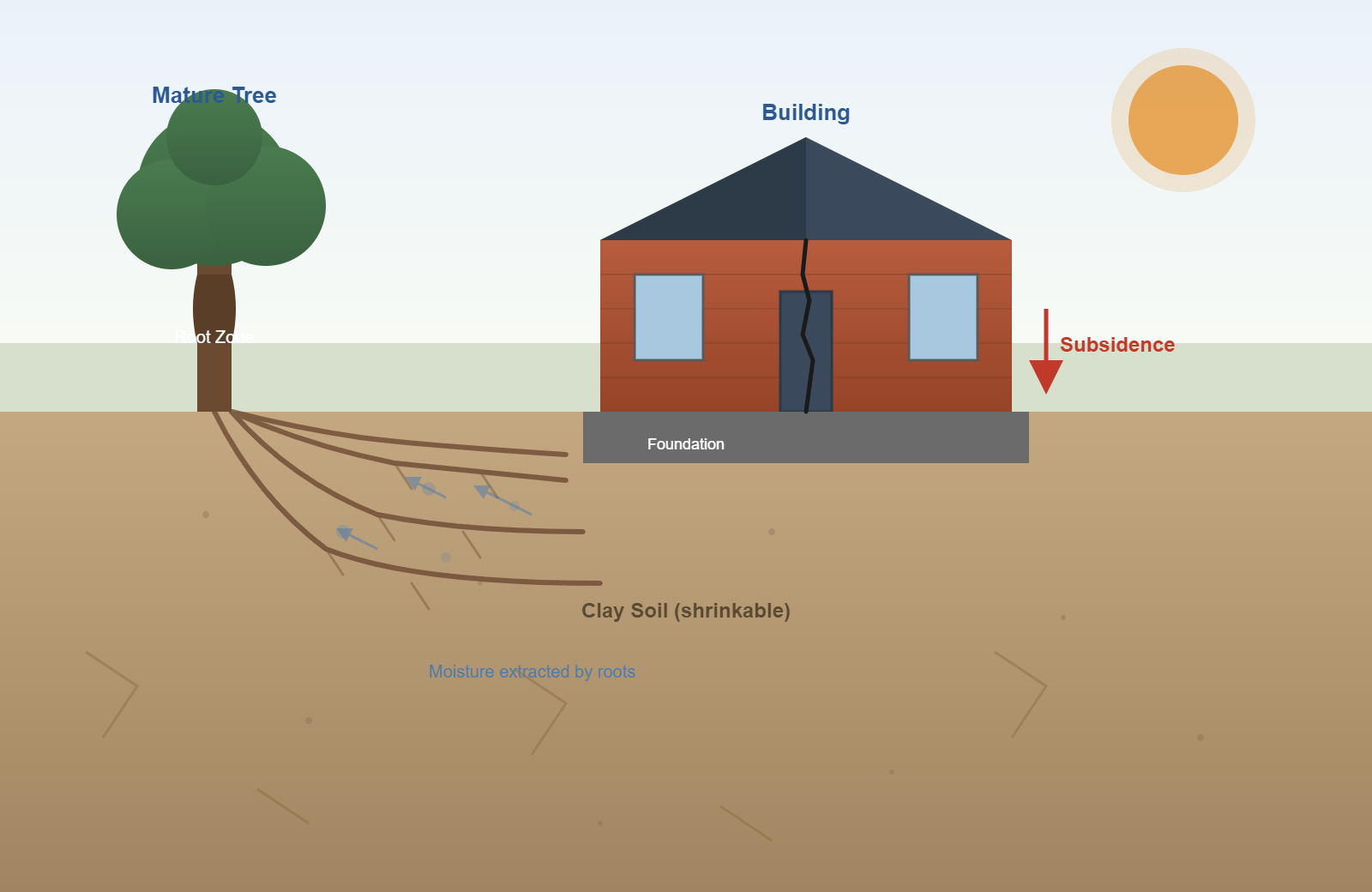
Subsidence occurs when the ground supporting a building moves downwards. In tree-related cases on clay, the main mechanism is usually moisture loss rather than roots physically pushing through foundations. Roots draw water from the soil; shrinkable clay loses volume as it dries; and foundations within the affected ground may move downwards.
If one part of a building moves more than another, the resulting distortion can cause cracks in walls and around openings. Hot, dry weather can add to the drying effect. Buildings with shallow foundations can be particularly vulnerable where tree roots influence the supporting clay.
Why this matters in North London
As explained by the British Geological Survey’s guidance on shrinking and swelling soils, London Clay is susceptible to changes in volume as its moisture content changes. This makes soil conditions an important consideration when investigating suspected subsidence in North London. However, a postcode alone cannot establish the ground beneath a particular house or confirm the cause of a crack.
For a property in North London, an assessment should consider the actual site: ground conditions, nearby trees, foundation construction, drainage and the pattern of damage. Regional geological information helps identify potential hazards, but it is not a diagnosis of movement at an individual address.
Does the distance from a tree tell you the risk?
There is no single distance that makes every tree safe beside every property. Species, mature size, soil type and foundation depth all matter. A tree in a neighbouring garden or along the street may also need consideration; the boundary does not define its area of influence.
Assess the whole setting rather than blaming the closest tree. A structural investigation and, where appropriate, advice from an arboriculturist can help establish whether vegetation is contributing to the damage.
Signs that warrant a structural assessment
Possible signs of movement include diagonal or stepped cracks, cracks around doors and windows, and doors or windows that begin to stick. New cracks or changes to existing damage deserve attention. However, cracking can also result from other causes, so appearance alone cannot confirm subsidence.
Photograph the affected areas, record the date and note any changes. Keep any previous surveys or repair records available for the person inspecting the property. If you suspect subsidence, contact your buildings insurer early to understand its investigation and claims process. The RICS consumer guide to subsidence explains the investigation and repair process in more detail.
How tree-related subsidence is investigated
An initial inspection helps identify the pattern of damage and what needs checking next. Further investigation may include crack and level monitoring, drainage checks, examination of foundations, soil investigation and identification of roots. The scope depends on the building and the evidence; not every property needs every test.
Monitoring can help distinguish ongoing or seasonal movement from historic damage. This is why filling a crack immediately may conceal useful evidence without addressing its cause.
Should you remove a tree to stop subsidence?
Tree removal should follow an assessment of cause and consequences. When an influential tree is removed, previously dried clay can gradually regain moisture and expand. This upward ground movement is called heave and can also damage a building. The likelihood depends on the ground conditions and drying history.
Pruning is not a guaranteed cure either. Whether tree management is appropriate should be considered with structural and arboricultural advice. Do not cut roots as a DIY remedy.
Before arranging tree work, check the tree’s protection status with your local council. Trees covered by a Tree Preservation Order generally require consent for works. Certain works to trees in conservation areas normally require six weeks' notice, unless an exception applies. Council-owned trees should be referred to the council.
Will the property need underpinning?
Underpinning is not the automatic response to subsidence. The first priority is to identify and address the cause, which may involve drainage repairs or appropriately planned vegetation management. Foundation works should only be specified when justified by the investigation and engineering assessment.
Frequently asked questions
Can a neighbour’s tree affect my house?
Potentially, if its roots influence shrinkable soil supporting your foundations. Its presence alone does not prove responsibility for damage. Investigation should establish the cause before tree works are proposed.
Does every crack mean subsidence?
No. Cracks have several possible causes. An assessment considers their location, pattern, history and any associated movement before recommending further investigation.
Can I plant trees near a house on clay?
Get advice on suitable species, mature size, positioning and the property's foundations before planting. Planning for the tree's mature growth is more useful than judging its size when purchased.
Structural advice across North London
If you are concerned about cracks or possible tree-related subsidence at a property in North London, contact LIBA Consulting to discuss a structural survey or crack assessment. For homeowners in Harringay, Wood Green and surrounding North London areas, understanding the cause is the first step towards choosing an appropriate repair.
Contact LIBA Consulting about your property.
This article provides general information. Recommendations for an individual property require a site-specific assessment.

Ready to Discuss Your Project?
Whether you need structural calculations, beam design, support with building regulations, or advice for an extension or loft conversion, we’re here to help. Send us your details and we’ll come back to you with a practical next step.
Read more